
My reaction to a swallow alarm call is only marginally slower than the intended benefactors. I don’t always get to see the source of the concern, and there are moments when the outcome is decidedly anticlimactic (such as the summer that the swallows and woodpigeons shared eave-space), but a quick dash outside will often bring close-up views of a marauding sparrowhawk or hobby – an adrenalised snapshot always enjoyed.
There was an additional alert to tune into this summer though. First delivered by a kestrel. A constant ‘kek-kek-kek’ call from a high, fluttering hover. I thought at first that it was a juvenile bird calling to a parent, but a closer look suggested it was an adult female, angry with something in the ash tree that sits at the head of the shallow, ponded coomb. I walked to get a closer look just in time to see the kestrel fold up and plunge, zipping through the upper branches and flushing a hawk probably twice its size. The pursuit was swift and dramatic, the goshawk, for that is what it was, being tagged more than once as it arrowed a diagonal path up and over the slope and out of sight.
For several weeks, the goshawk (I am 90% sure it was an immature male but couldn’t ever get a definitive view) provoked local unrest. The crows were a useful indicator, though it was the buzzards, to whom the crows normally projected their ire, that were most unsettled. The nearby pair would leave the pine trees where they nest and pitch up either side of the great ash that the goshawk seemed to favour. Then they would call and call, joined by the crows in a temporary truce, until the interloper left. It was a pattern that meant I wouldn’t need to see the goshawk to know it was there, and also led me to ponder the changing fortunes of our local raptors.

The goshawk remains a local rarity, although it will likely colonise much of the suitable habitat in West Dorset over the next couple of decades. Its upward fortunes contrast with that of the peregrine falcon, which is a bird we barely see from the garden now. The pylon-nesting pair (that we would see more days than not) have gone, and none of their offspring have filled the territory. There is far less wandering from coastal nesters, either, echoing a dip in population across much of the peregrine’s more ‘traditional’ range. Towns and cities remain a reassuring stronghold, but it is interesting to follow the fluctuation of fortune.
As with the local grass snake population. Numbers in the village seem to have risen year on year, skewed no doubt by my awareness of their habits, but this year saw a noticeable drop. There still seemed to be a reasonable amount of smaller, likely male, individuals, but the bigger females were nowhere to be seen. I only found one skin (from an individual that I had also seen) of one of the big females (100cm+ in length) suggesting that something had happened overwinter.
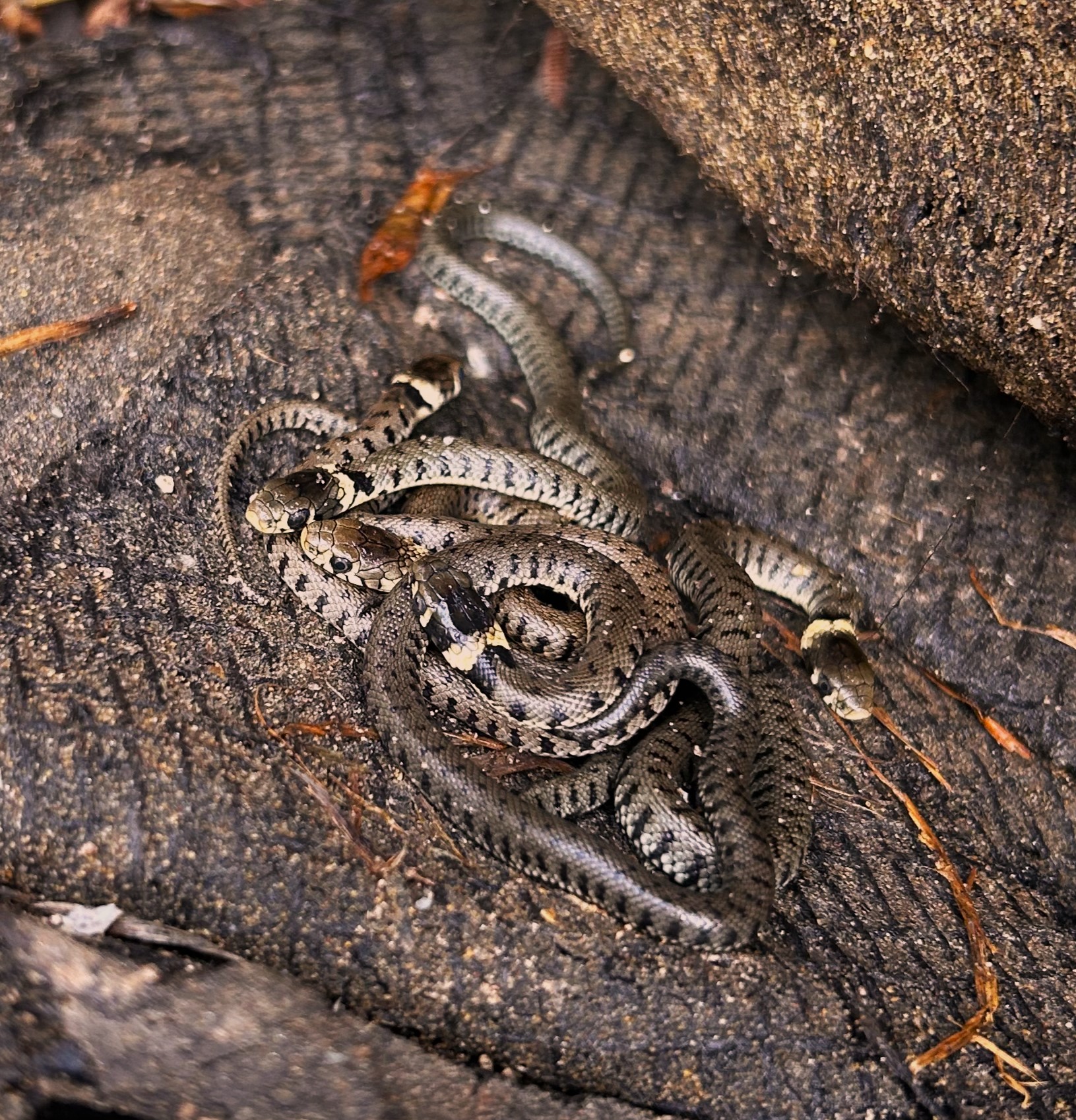
I can speculate the cause – the fluctuating weather, loss of food (frog and toad numbers have plummeted), predation or human disturbance, but the snake season is ending with hope. I always find a few of the hatchlings come the end of summer but stumbled upon a mass emergence following September’s blaze. I counted thirty basking on the end of the compost heap, with plenty more tucked away. They will be thinned by predators and the cold, but it bodes well for future recruitment. Hopefully the amphibians will follow suit.
 Kevin Parr
Great bird observations and I love the Italianate Baroque cloudscape.
Thanks Michelle – the clouds looked stunning that day. Easy to overlook when they are not rolling with drama!